
From source evidence to informed monitoring decisions.
Loopa checks the source data you provide against study requirements and across documents. Potential issues become Loops with supporting evidence for monitor assessment. EDC Verification compares source information with EDC data through an available read-only connection.
- How it arrives
- Source documents uploaded directly to Loopa or through an available connection.
- What is read
- The source data you provide, including supported handwritten documents.
- Read against
- The requirements established for your study’s review scope.
- Human review
- Monitors assess potential issues and determine the next step.
- You receive
- Loops with supporting evidence and recorded review decisions.
- Site and EDC
- Document submission through the agreed workflow. EDC connections are read-only where available.

Four steps, shown on the product.
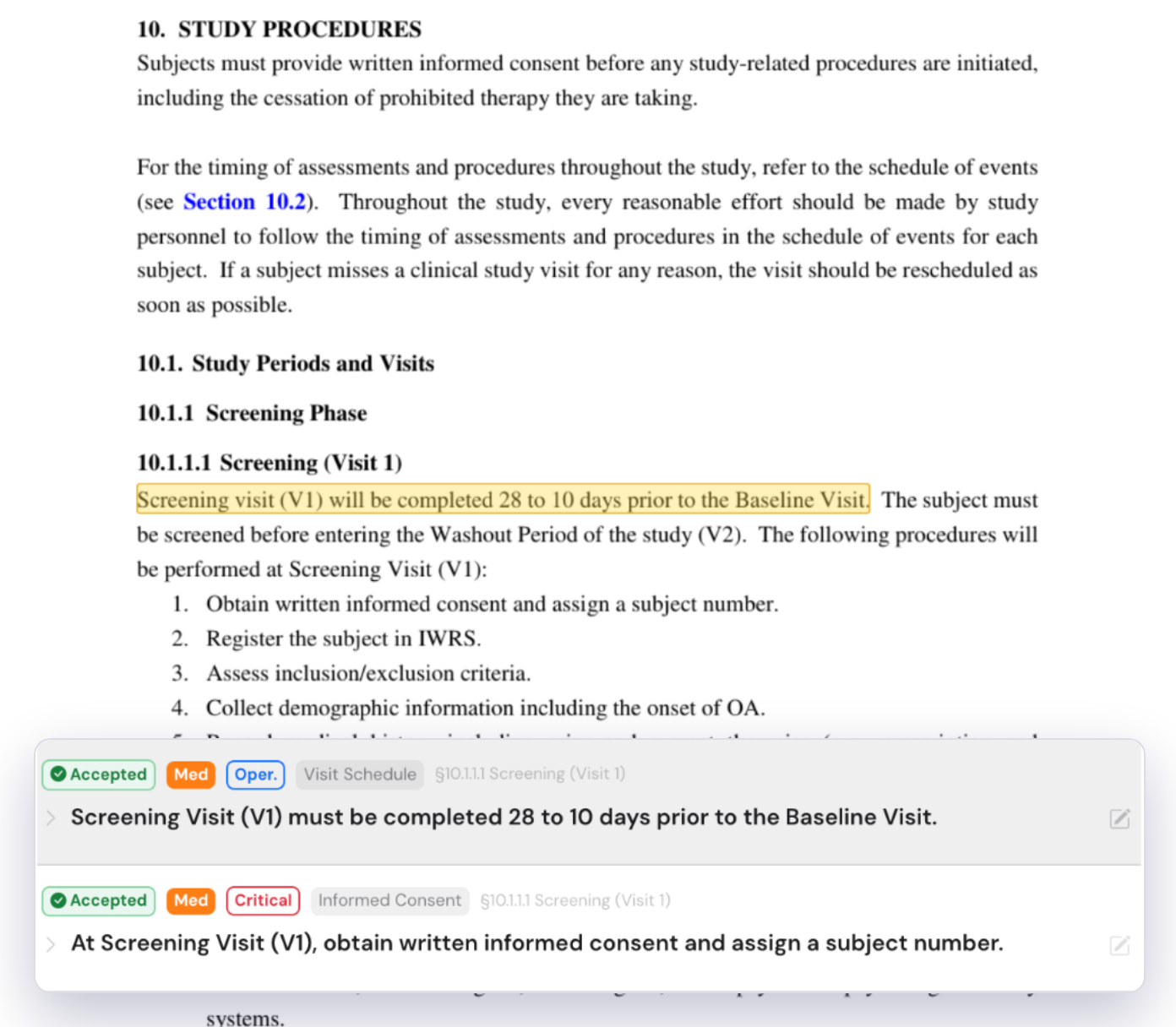
Product screens show synthetic study data. Numbered markers match the notes beside each screen.Requirements Intelligence.
Loopa structures requirements from the study documents in scope and links them to their source text. A monitor reviews and accepts the requirements baseline.
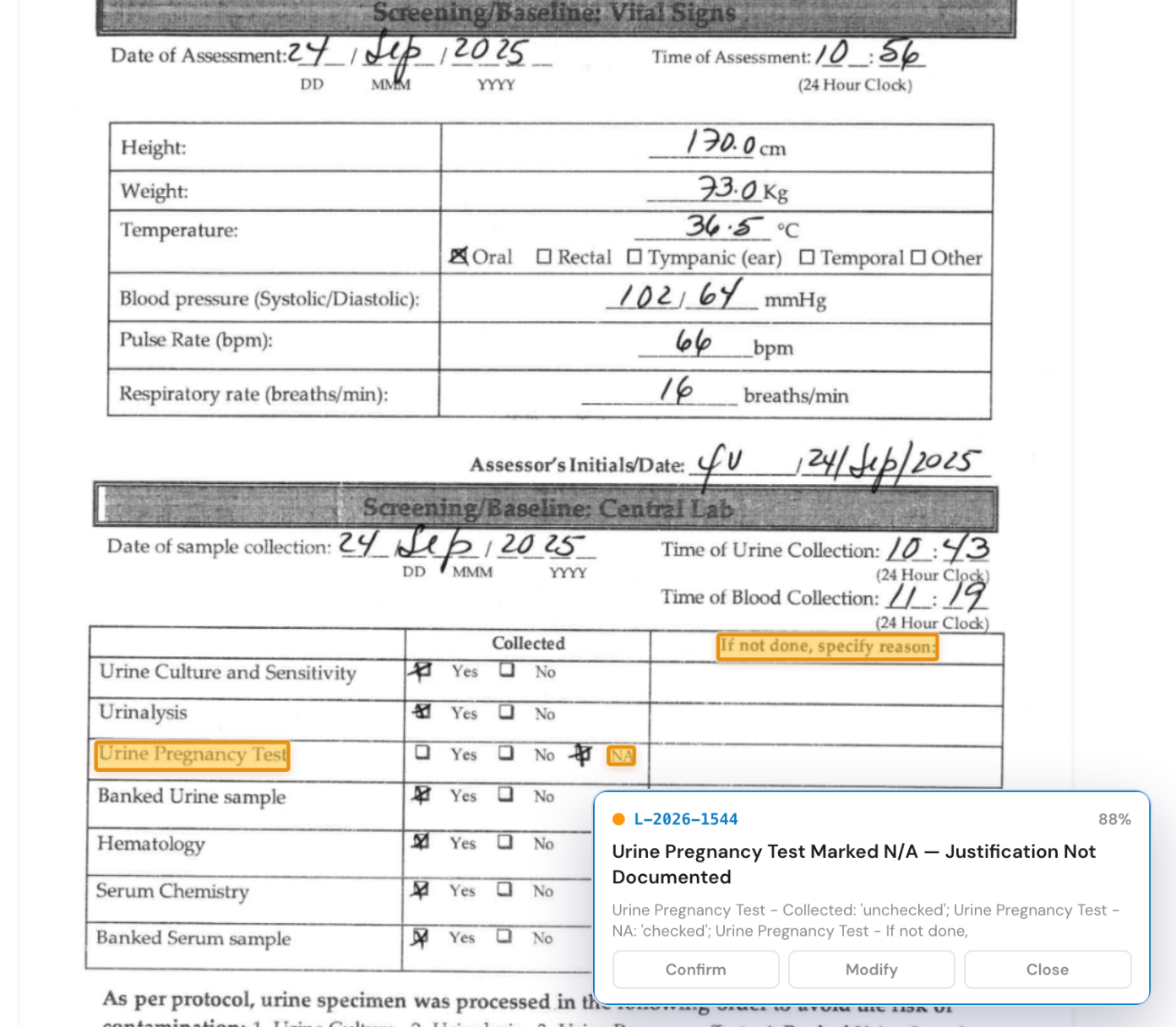
Source review, with evidence attached.
Loopa checks the source documents provided and opens potential issues as Loops beside the supporting evidence.
A Loop is a structured record of a potential issue requiring human assessment. It becomes a Finding only when a monitor confirms it.
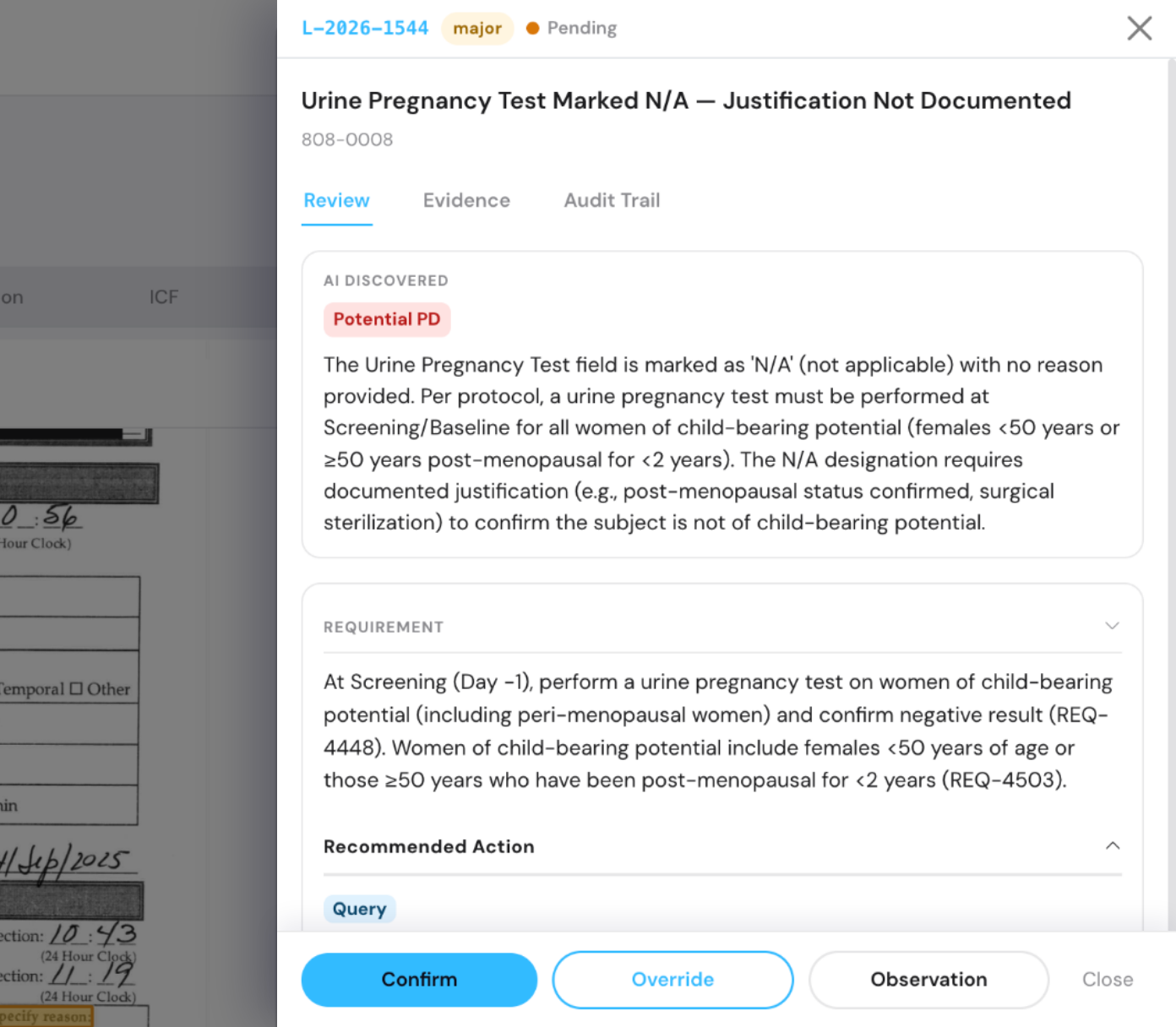
Monitor assessment and decision.
Each Loop presents the potential issue, relevant requirement, and suggested action. A monitor assesses the evidence and records a disposition: confirm, override, observation, or close. A confirmed Loop becomes a Finding.
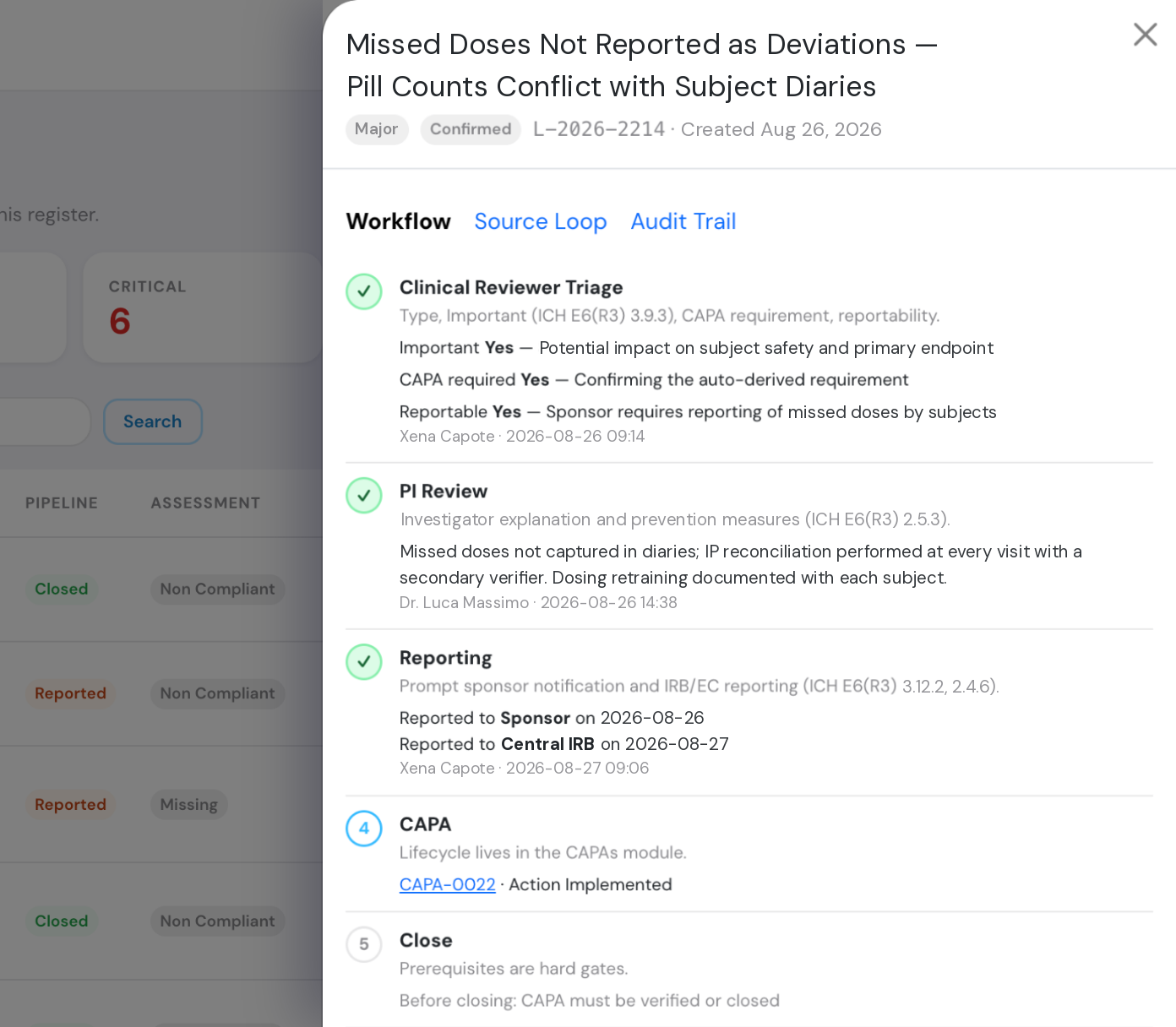
Findings carried through to closure.
This illustrative Finding shows triage, PI review, reporting, and CAPA follow-up. Completed steps show who acted and when.
Source review starts with the study’s requirements.
Who does what, at each step.
The table shows Loopa-led monitoring. With platform licensing, the sponsor’s or CRO’s monitors perform the human review and follow-up.
Responsibilities, access, and escalation arrangements are defined for the study. The platform supports review; it does not make clinical judgments or independently determine compliance.